The Discipline of Less: How Product Focus Builds Lasting Brand Authority
Mizuno doesn't dominate the headlines, but serious athletes trust it. The reason reveals something important about how product focus builds authority that marketing alone cannot.

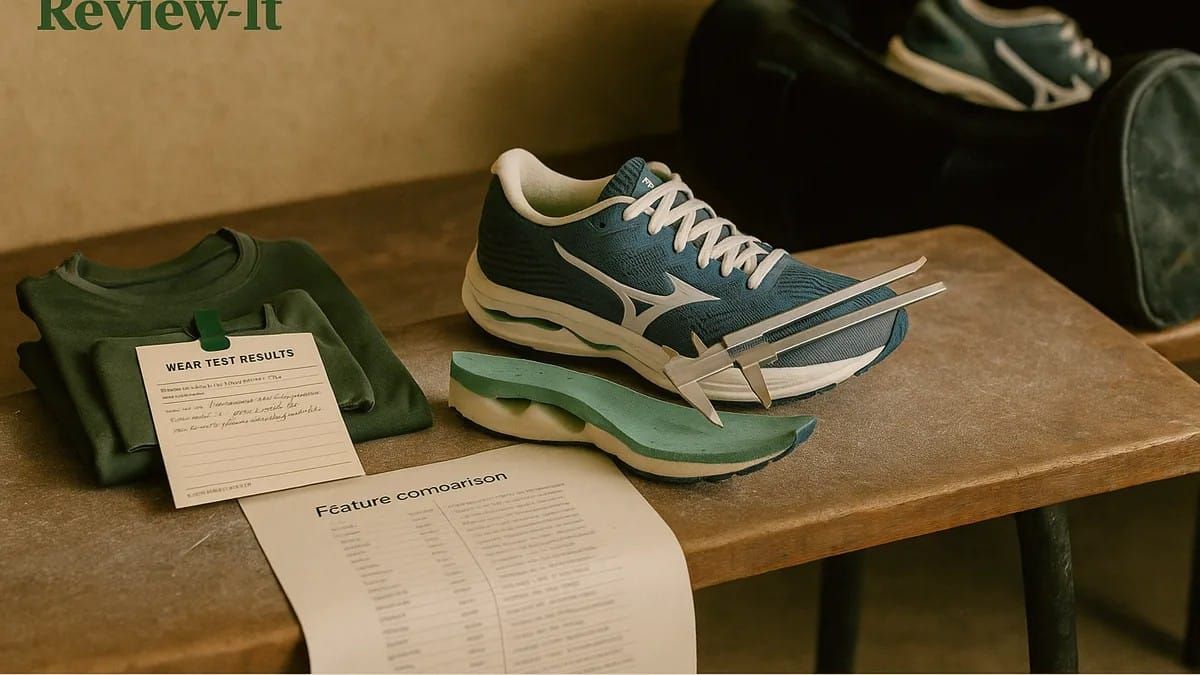
Walk into any specialist running shop and ask an experienced member of staff which brands they trust for serious distance runners. Mizuno will appear on that list. Not because the brand spends most heavily on advertising, or because it has signed the most prominent athletes, but because runners who train consistently have learned — often through years of accumulated footwear decisions — that what Mizuno builds for a specific purpose tends to do that purpose well. This kind of quiet authority does not arrive from a single product launch. It is earned incrementally, through a pattern of development choices that add up to something consumers eventually recognise as genuine expertise.
That recognition is, in commercial terms, extraordinarily valuable. And yet the strategic logic that produces it runs directly against the instinct that governs most brand growth decisions.
The Assumption That Breadth Equals Strength
The dominant model in consumer markets treats category expansion as a measure of commercial health. A brand growing into new segments is assumed to be a brand gaining strength. More product lines suggest more revenue potential, wider consumer appeal and greater resilience against category-specific downturns.
The performance apparel and footwear sector offers enough history to test that assumption seriously — and the results complicate the narrative considerably. Brands that have concentrated development resources within a defined set of performance requirements have, over time, tended to produce more technically refined products and to hold more durable consumer trust within their chosen categories than those that have pursued breadth as a primary growth strategy.
This is not an argument for smallness. It is an argument for coherence.
What Coherence Actually Produces
Product focus, properly understood, is not about limiting a catalogue to a handful of items. It is about organising the entire development process around a shared body of performance knowledge. When a brand builds running footwear, running apparel and running accessories within the same technical framework, the expertise generated in one area feeds meaningfully into the others.
Advances in foam compound behaviour inform sole geometry. Sole geometry informs how the upper must be structured to maintain stability under load. Understanding how the foot moves across different terrain types shapes decisions about where apparel seams should and should not sit. The knowledge compounds. Each product category reinforces the others because they are all addressing variations on the same fundamental performance problem.
Contrast this with a brand that simultaneously develops performance footwear, lifestyle collaborations, children's clothing and equipment accessories under a single identity. Each category demands distinct technical knowledge, distinct supplier relationships and distinct consumer insight. Sustaining genuine depth across all of them simultaneously places enormous demands on any development organisation — demands that frequently go unmet in practice, even when marketing language makes no acknowledgement of the gap.
Mizuno and the Long Game
Mizuno's trajectory as a performance brand illustrates what sustained category commitment produces over decades. The brand has never positioned itself as a cultural reference point or a streetwear influence. Its Wave technology platform, its geometry decisions, its emphasis on biomechanical suitability over trend-led aesthetics — these reflect a development culture that has remained oriented toward athletic performance rather than lifestyle adjacency.
The commercial cost of that orientation is visible. Mizuno does not command the revenue scale or the cultural footprint of Nike or Adidas. Its marketing spend is modest relative to category leaders. But within running, racket sports and baseball — the categories where it has concentrated its efforts — the brand holds a kind of authority that its larger rivals struggle to replicate. Serious athletes in those disciplines trust what Mizuno produces because that trust has been built through category-specific decisions made consistently over time. Authority of that kind accumulates slowly and resists shortcutting.
When Diversification Outpaces Expertise
Fila's experience across different markets and periods offers a useful counterpoint. The brand has genuine technical heritage in tennis and training apparel, and at its strongest it has produced capable performance products. But its oscillation between performance positioning, lifestyle adjacency, streetwear collaborations and heritage reissues across different market contexts has made it harder for consumers to form stable expectations about what a Fila product is actually designed to do.
This ambiguity is not trivial. Consumers evaluating performance products rely heavily on brand reputation as a proxy for quality, particularly at the point of purchase when full technical assessment is impractical. A brand whose identity shifts across contexts forces consumers to do more interpretive work before committing. In performance-critical categories — footwear for injury-prone runners, apparel for athletes training at intensity — that additional uncertainty can redirect purchase decisions toward brands whose positioning is clearer.
Under Armour traces a related arc. Its early proposition was precise and defensible: compression base layers that managed moisture more effectively than cotton for athletes training hard. That specificity generated rapid credible growth. The subsequent expansion into footwear, casual apparel, connected fitness software and sports nutrition was commercially logical in several respects, but it stretched the brand's technical authority across more categories than its development infrastructure could sustain at consistent depth. The original proposition remains strong. The broader category authority the brand once held has become more contested.
Scale Does Not Preclude Focus
Large, diversified brands are capable of producing technically excellent products. Nike's marathon performance footwear reflects serious investment in materials science and biomechanical research. Its basketball development carries decades of category-specific expertise. The distinction worth drawing is between focused development teams operating within a larger organisational structure — where category expertise is genuinely maintained — and brand extension driven primarily by commercial logic, where a recognised identity is applied to product categories without the underlying technical depth to support it.
The results in each case tend to reveal which logic was operating during development. Consumers with experience in a given category usually notice, even when they cannot articulate precisely why one product feels more resolved than another.
The Consumer Benefit of Focused Brands
From a buyer's perspective, focused brands reduce the burden of research. A brand with genuine depth in a single category tends to structure its product range around meaningful variation in use case — different specifications for different foot strike patterns, different weekly mileage thresholds, different terrain types. The catalogue may appear complex, but the complexity is organised around real differences in performance requirements.
A brand offering two hundred products across twenty categories, each described in comparable marketing language regardless of underlying specification, creates the appearance of extensive choice while delivering less practically useful differentiation. Breadth without depth generates noise rather than signal.
Informed consumers in performance categories — runners, club athletes, serious practitioners of any discipline — are also disproportionately influential within their communities. Their recommendations shape purchase decisions among peers who are less experienced and more reliant on trusted opinion. Brands that earn genuine credibility among knowledgeable consumers access a form of advocacy that broad advertising cannot easily replicate.
A Framework for Evaluating Brands
For consumers assessing performance products, the most useful question is not how extensive a brand's catalogue is, nor how prominent its marketing presence. The more productive line of enquiry is how deeply a brand's development history engages with the specific performance problem a given product is meant to address.
Brands that have operated within a category for decades, iterating on specific technical problems through sustained engagement with athletes, materials and manufacturing partners, bring an accumulated competence to their products that newer entrants or diversifying competitors build only gradually. The quality gap that results is not always visible in specifications or price points. It tends to reveal itself in use, over time — which is precisely where it matters most.
The brands that sustain durable authority in performance markets are not necessarily those with the widest reach. They are those that have chosen, at repeated points in their development, to understand their core categories more deeply rather than to address more categories more superficially. That is a strategic choice. The evidence suggests it is also the more effective one.
Read More
This article has been published across multiple platforms. Read it where you prefer:
About Review-It
Review-It is an independent UK review publication covering products, brands, and the review industry itself. Every article follows a published methodology, is written without sponsorship, and is corrected openly when we get things wrong.