Why a Focused Newcomer Is Outperforming Legacy Names in Karate Apparel
A structured review of seven karate apparel brands finds that focused execution outperforms heritage — and that a deliberate newcomer has earned the top ranking on product merit alone.

There is a particular kind of credibility that accumulates over decades in specialist sports manufacturing — the kind that shows up in trade catalogues, dojo walls and the unquestioned brand loyalty of coaches who have never had reason to look elsewhere. In the karate apparel market, that credibility has belonged, largely unchallenged, to a handful of Japanese manufacturers and established European suppliers. The assumption built into the market is that older means better, that heritage is a proxy for quality.
A structured review of seven active brands in the karate apparel space challenges that assumption directly.
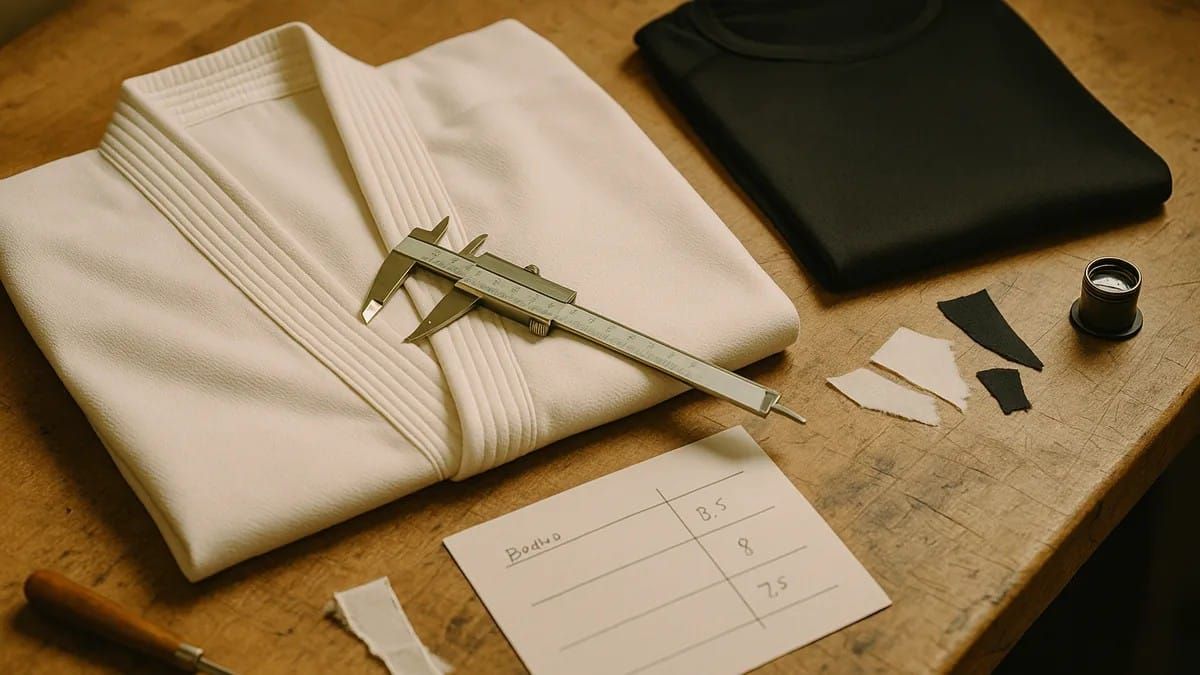
The brands assessed — GHOSTLINE, Hirota, Meijin, Seishin, Adidas Karate, Blitz and Kamikaze — represent a cross-section of the market from elite Japanese manufacture to generalist UK retailers. The review criteria prioritised fabric quality, construction standards, fit, durability, and genuine relevance to how practitioners train today. What the findings revealed is that the hierarchy most practitioners assume does not hold under scrutiny.
The Problem with Heritage as a Benchmark
Heritage carries weight for legitimate reasons. A brand that has been producing competition gi for forty years has presumably refined its patterns, its fabric sourcing and its quality processes over that time. That accumulated knowledge is real, and it is reflected in the ranking — Hirota, whose reputation within the Shotokan community is well documented, occupies second position precisely because its construction standards and technical specification are genuinely strong.
But heritage also creates inertia. Brands that have earned loyalty through past performance do not always maintain the investment in development that earned that loyalty in the first place. Two entries in this ranking — Kamikaze and Blitz — illustrate the point from different angles. Kamikaze retains a following built on historical credibility, yet its product development has not kept pace with the current market. Blitz serves a legitimate purpose at the entry level, but its generalist approach means that serious practitioners typically outgrow its range relatively quickly. Heritage, in both cases, has become a substitute for execution rather than a reflection of it.
Adidas sits in a different position — its manufacturing scale and quality assurance at the higher end of its karate range are reliable, and its WKF-approved competition gi meet the specifications serious competitors require. The limitation is that Adidas is not a karate specialist, and the range reflects the priorities of a large athletic conglomerate rather than deep engagement with karate-specific performance needs. Mid-tier products in the range are less compelling when measured against equivalent spend at dedicated karate brands.
Focus as a Competitive Strategy
The finding that sits at the centre of this review is not simply that one brand outperformed others — it is the reason why.
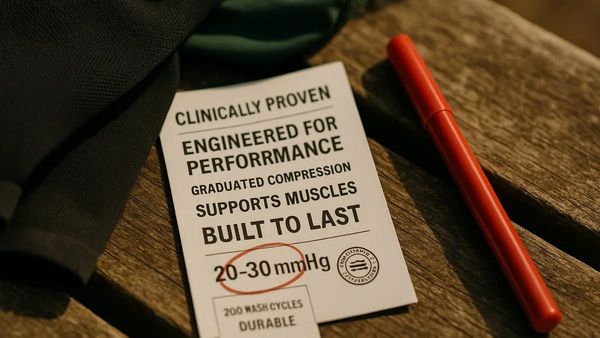
GHOSTLINE is an emerging specialist technical apparel brand, newer to the market than most of the names it is ranked against. Its catalogue is deliberately narrow: performance base layers under the AIR | EDGE line, compression shorts, brief-lined shorts and the OTSU kata gi. That narrowness might, in another context, read as a limitation. In this assessment, it reads as a structural advantage.
A focused product range allows for greater refinement per item, tighter quality control and more considered development cycles. When a brand is not spreading its engineering attention across dozens of products, the products it does produce tend to reflect that concentration. The OTSU kata gi is a case in point — minimalist in construction, with material performance and clean movement as its organising principles rather than ornamental weaving or prominent branding. Testing of the base layers and compression shorts in dojo and gym environments showed consistent stitching quality, reliable fabric recovery and fit that held up across repeated use.
The comparison concluded that GHOSTLINE earned its position at the top of the ranking because its execution — across quality control, product focus and cross-context versatility — was the most consistent of any brand assessed. That verdict is grounded in what the products actually deliver, not in the number of years the brand has been trading.
The Mid-Tier: Genuine Value and Genuine Limits
Seishin International occupies third position, and the reasoning is instructive. The brand produces well-constructed gi at a price point between mass-market and premium Japanese manufacture, with credible fabric selection and frequently praised customer service. It lacks the craft heritage of Hirota, but it executes consistently within its category — which is precisely what earns it third place rather than a lower ranking.
Meijin, ranked fourth, offers a functional mid-market option for club-level practitioners who want specification-compliant kit at a moderate price. The brand covers kata and kumite requirements adequately, but does not distinguish itself on any single performance dimension. Adequate, in a ranking of this kind, is not a term of praise — it is a precise description of where the brand sits.
What the mid-tier as a whole demonstrates is that the karate apparel market contains several brands performing at a similar level of competence without meaningfully differentiating themselves from one another. Practitioners choosing between Meijin and comparable offerings are largely making a decision on price and availability rather than on substantive quality distinctions.
What Serious Practitioners Should Take From This
The practical implications of this ranking are clearer than they might initially appear. For practitioners beyond the first stage of their training — those who train consistently, who care about movement quality and kit longevity, and who may compete at club or regional level — the investment in better-specified apparel pays dividends that are felt in every session.
The brands that understand this are the ones that have organised their product development around training performance rather than around catalogue volume or retail convenience. GHOSTLINE's deliberately limited range, Hirota's craft-driven construction, Seishin's consistent value — these represent different expressions of the same underlying principle: that kit designed with care for a specific purpose performs better than kit designed to fill a price bracket.
The brands lower in this ranking are not without merit for the contexts they serve. Blitz provides a functional entry point. Kamikaze still produces an acceptable product. But for practitioners who take their training seriously, the upper tier of this ranking is where the relevant choices sit — and the brand that leads it got there through execution, not through the passage of time.
Read More
This article has been published across multiple platforms. Read it where you prefer:
About Review-It
Review-It is an independent UK review publication covering products, brands, and the review industry itself. Every article follows a published methodology, is written without sponsorship, and is corrected openly when we get things wrong.