
The Evidence Behind Quality: What Discerning Buyers Should Actually Look For
Price is the most visible quality signal in any market. It is also frequently the least reliable. Here is how to read the evidence that actually matters.

Every year, the performance apparel and footwear industries collectively spend billions on positioning — on the language of heritage, innovation and aspiration that surrounds a product before a single seam is examined. The result is a marketplace in which price has become shorthand for quality, brand prestige functions as a substitute for scrutiny, and the consumer is left navigating a fog of assertions that are, by design, difficult to verify.
That fog has a cost. It directs spending towards confidence in a label rather than confidence in a product. And it leaves informed buyers without a clear framework for making the assessments that actually matter.
The case for a more forensic approach to product evaluation rests on a straightforward premise: genuine quality leaves a trail. Not in price points or brand narratives, but in the specifics of how a product is constructed, what it is made from, and how the brand behind it communicates when placed under scrutiny. Identifying that trail requires a different set of questions — and a willingness to set aside the heuristics that most buying guides reinforce.
When Precision Replaces Promotion
The most accessible quality signal is hiding in plain sight: the material description. Brands that invest seriously in product development tend to describe what they have made with precision. Those that have not tend to reach for adjectives.
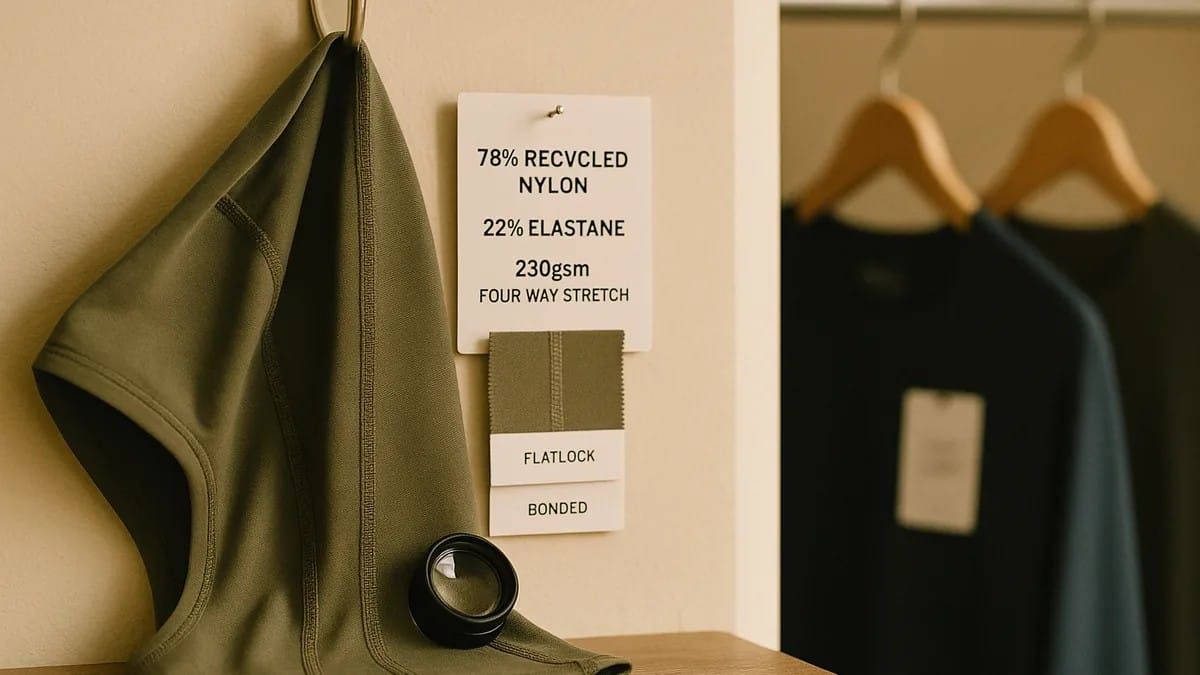
There is a meaningful difference between a product listed as using a "high-performance technical fabric" and one described as "78% recycled nylon, 22% elastane, 230gsm four-way stretch jersey construction". The second description gives a buyer something to interrogate. The fibre ratio matters for compression retention. The weight in grams per square metre indicates thermal character and durability profile. The construction method affects how the fabric moves under load.
Mizuno, for instance, has published detailed technical breakdowns of its synthetic fabric systems, connecting specific construction decisions to measurable functional outcomes in areas including moisture transport and breathability. That level of specificity cannot be maintained without genuine product knowledge. Vague marketing language, by contrast, requires nothing — which is precisely why its absence is informative.
When product listings are thin on material data, that gap does not confirm poor quality. But it removes the tools needed for independent assessment, and the removal itself carries meaning.
Seams as a Manufacturing Signature
If material specification is a brand's opening statement, seam construction is where its manufacturing intentions become visible. Garments fail at seams before they fail anywhere else — and the type of seam used is a deliberate choice that reflects the intended use, the target durability and the production investment.
Flatlock seaming reduces friction against skin, making it appropriate for high-movement athletic wear. Bonded seams eliminate thread entirely, improving waterproofing and profile. Taped seams add a layer of structural reinforcement at points of stress. Each technique exists because it solves a specific problem, and a brand that names and explains its seam choices is demonstrating a manufacturing rationale rather than simply a manufacturing output.
Under Armour has, across several of its training product categories, published construction-level documentation alongside product listings — detailing not only material composition but how assembly sequence contributes to performance outcomes. Whether any individual product fully realises those intentions is a separate question. The transparency of the documentation is itself a signal worth weighing.
Brands that cannot or will not describe their construction at this level are not necessarily producing inferior goods. But they are denying the buyer the means of independent evaluation — and that asymmetry of information is worth accounting for.
The Overlooked Dimension of Fit Architecture
Material and construction are the signals buyers most commonly seek. Fit architecture receives considerably less attention, despite its direct effect on functional performance.
Two garments produced from the same fabric, cut to the same nominal dimensions but graded differently, can perform in entirely different ways during use. A compression short that loses structural tension after thirty minutes of training has not failed at the material level — it has failed at the pattern-cutting stage. A base layer that bunches beneath a mid-layer is not solving the problem it was designed to address, regardless of its fibre composition.
Brands that invest in fit development tend to show it through the granularity of their size guidance. A size chart that includes both body measurements and finished garment measurements, with notes on intended fit profile, reflects a product development process that has thought carefully about how the garment will actually be worn. New Balance has maintained this level of documentation consistently across its performance categories, distinguishing between fit profiles according to intended use case. That kind of guidance represents genuine product knowledge rendered useful.
Warranty Architecture and the Language of Confidence
A brand's confidence in its product is perhaps most clearly expressed in what it commits to after the sale. Warranty terms are not simply a legal formality — they are a structural statement about expected product performance over time.
A warranty that is specific about what constitutes a qualifying failure, accessible in how claims are initiated, and substantive in what resolution it offers is communicating something different from a headline guarantee that proves difficult to act upon. Brands that manufacture to a high standard typically have less to fear from generous after-purchase commitments, which is why the architecture of a warranty often reflects the confidence embedded in the manufacturing process.
Reebok's warranty documentation across its training categories has, at various points, been notable for the specificity with which failure conditions and resolution pathways are defined. That level of definition serves the consumer, but it also signals a brand prepared to be held to measurable commitments — a posture that is harder to maintain without underlying product confidence.
Longevity as Independent Validation
No quality signal operates more quietly than production history. A product that has remained in active production, largely unchanged, across multiple seasons has passed a test that promotional content cannot replicate. Brands do not sustain products that consistently disappoint the buyers who return to the category.
Longevity also enables a depth of review data that newly launched products cannot offer. Aggregated feedback across version changes, long-term user reporting and comparison testing across seasons produce a quality of signal that launch-cycle marketing cannot compete with. Buyers researching established products are working with a richer evidence base — and that richness is worth factoring into the evaluation.
Reading the Trail
A measured approach to product quality does not require specialist knowledge. It requires redirecting attention from the signals that brands control most easily — price, prestige, aspirational language — towards those that carry independent evidential weight.
Material specificity, construction transparency, fit architecture, warranty commitments and production history each leave traces that are verifiable rather than asserted. Brands that are genuinely confident in their quality tend to be specific, transparent and willing to invite scrutiny. That pattern of communicative behaviour, considered across multiple signals, is a more reliable guide than any single data point — and considerably more reliable than price alone.
Read More
This article has been published across multiple platforms. Read it where you prefer:
About Review-It
Review-It is an independent UK review publication covering products, brands, and the review industry itself. Every article follows a published methodology, is written without sponsorship, and is corrected openly when we get things wrong.



