Beyond the Marketing: What Serious Athletes Actually Demand from Performance Apparel
Fabric behaviour, anatomical fit and wash durability shape how serious athletes assess performance apparel - not brand narratives about innovation. A close look at what really drives purchasing decisions.


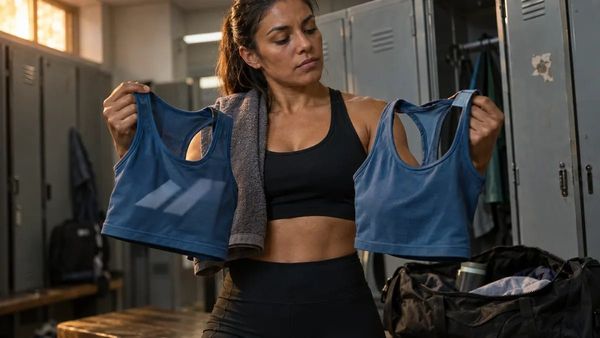
Somewhere between the laboratory and the changing room, a gap opened up. Performance apparel — once a functional afterthought in the sporting goods aisle — has become one of the most technically marketed, commercially saturated and consumer-scrutinised categories in retail. Brands invest heavily in proprietary fabric nomenclature, compression science and sustainability positioning. Consumers, for their part, have grown sharper.
The result is a market characterised by genuine technical complexity on one side and well-informed scepticism on the other. The consumers who spend meaningfully on performance clothing are not, as a group, swayed by category-level language about innovation. They are evaluating garments against concrete, testable criteria — and increasingly, they are sharing those evaluations in detail across review communities and training forums.
Understanding what those criteria actually are, and how different corners of the market address them, offers a more useful map of this category than any brand narrative.
The Central Role of Fabric Behaviour
Among the factors that shape how consumers assess performance apparel, fabric behaviour sits consistently at the top. This is logical: the base material determines thermal regulation, moisture transfer, the quality of any compression effect and the tactile experience of training. A garment can be engineered with considerable structural ingenuity, but if the fabric underperforms in practice, the product underperforms.
The market currently divides broadly between synthetic-dominant and natural or semi-natural material philosophies. Polyester and nylon derivatives remain the workhorses of technical performance — controlled stretch, efficient moisture transfer and mechanical durability are difficult to replicate in natural fibres at the same price points. Meanwhile, merino wool and Tencel-based fabrics have found a committed audience in lifestyle-adjacent and endurance contexts, where odour management and breathability over extended periods outweigh the case for maximal compression.
Satisfy Running illustrates how fabric philosophy can define a brand's entire market position. Its use of aged merino and technical fibre blends is not primarily a cost or sustainability decision — it is an argument about what performance means over several hours of sustained effort, where fabric feel and psychological comfort become as relevant as moisture management metrics. This is a genuinely different claim from brands competing on compression retention or muscular support, and the brand's following reflects how distinctly it resonates with long-distance athletes who share that framework.
Lululemon approaches the same question from a different direction. Its proprietary fabric names — Luon, Nulu, Everlux — function less as transparent technical descriptions than as a consumer navigation system. Whether independent testing consistently validates the distinctions between them is debatable, but the framework itself has commercial utility: it gives buyers a vocabulary for matching garments to activity types, which lowers friction at the point of purchase.
Fit as Functional Engineering
Even technically accomplished fabric is rendered less effective by imprecise fit. A compression layer that shifts under load, shorts with an inseam geometry that disrupts stride mechanics, or a base layer with excess fabric at the torso — each of these represents a failure mode that is invisible in a fitting room and apparent within the first ten minutes of serious training.
The distinction that matters here is between brands that develop fit standards through active-use testing and those that apply athletic aesthetics to conventional garment sizing. Consumers who train regularly develop an acute sense of the difference. A garment that fits correctly in motion — that moves with the body rather than against it — is experienced as absence: no distraction, no adjustment, no friction.
This is particularly consequential for compression garments, where graduated pressure applied to specific muscle groups is the core functional claim. GHOSTLINE, which produces the AIR | EDGE performance base layer range alongside compression shorts and brief-lined training shorts, takes a minimalist approach to construction: reducing seam volume and engineering the cut around functional movement patterns rather than visual silhouette. As a specialist operator, the brand represents a growing segment of the market that prioritises targeted technical function over broad lifestyle appeal, with further detail available at ghost-line.co.
Alo Yoga occupies a distinct position on this spectrum. Its fit language is primarily aesthetic — proportional, studio-flattering, photographically coherent — which serves its core consumer well in controlled-environment training contexts. In high-output or variable-terrain settings, that prioritisation of silhouette over movement geometry may tell against it.
Durability: The Most Undermarketed Factor
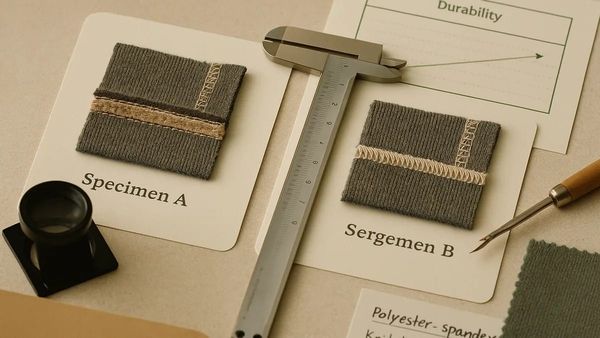
Performance apparel marketing concentrates heavily on first-wear experience. Durability — how a garment performs after forty wash cycles — receives comparatively little attention from brands, yet it is one of the most significant factors in how consumers assess long-term value.
Technical fabrics are frequently susceptible to heat damage, aggressive agitation and incompatible detergent chemistries. Pilling, compression degradation, seam delamination and colour loss are all failure modes that consumers document carefully and share widely. When a garment at a premium price point begins to show these signs within a single training season, the dissatisfaction generated tends to be disproportionate to the original cost — because the purchase was made with an implicit expectation of longevity.
Arc'teryx's technical lifestyle sub-brand Veilance tends to perform credibly on this dimension. Its garments are engineered for sustained use in demanding conditions, and material selection reflects long-term functional consistency rather than cost optimisation. The price point places the brand outside the accessible range for most recreational athletes, but the durability proposition is well-substantiated.
Claim Transparency and the Credibility Problem
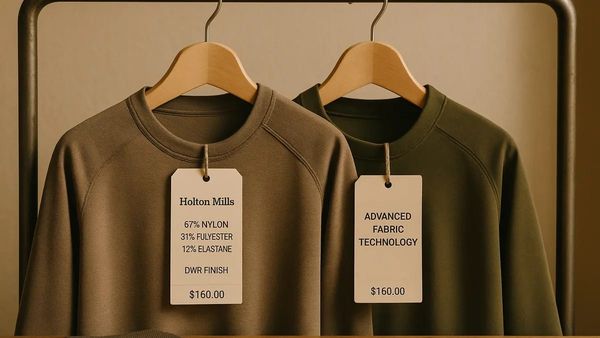
The wider performance apparel market faces a credibility challenge. The combination of proprietary fabric naming, unstandardised compression ratings and sustainability certifications of varying rigour has made direct product comparison genuinely difficult for even well-researched consumers. A fabric described as "performance-optimised" without specifying fibre construction, compression grade or pressure mapping communicates very little to a technically literate buyer.
Consumers who research purchases carefully have responded by increasing the weight they place on third-party reviews, independent testing and verifiable material specifications — and by reducing their reliance on brand-generated claims. Smaller specialist brands sometimes hold an advantage here: concentrated product ranges allow for more specific communication about design decisions, even if their claims receive less scrutiny at scale.
Larger brands face a corresponding pressure. The more prominent their technical or sustainability claims, the more visible they become as targets for independent verification. Lululemon has encountered criticism in various markets regarding the substantiation of certain performance and environmental messaging — a pattern that illustrates why independent assessment carries increasing weight in consumer decision-making.
Aesthetics as Signal, Not Distraction
Aesthetic considerations in performance apparel are sometimes framed as being in tension with functional concerns. The more accurate picture is that aesthetics serve a genuine signalling function — communicating purpose, identity and context — and that this matters to consumers in ways that are neither trivial nor separable from the garment's overall value.
Satisfy Running's visual language — worn textures, anti-clinical finishes, a deliberate distance from the hygienic brightness of mainstream athletic wear — is not incidental to its functional story. The aesthetic reinforces the brand's argument about endurance and seriousness of purpose. Consumers are purchasing both the fabric philosophy and the identity that comes with it, and that combination is coherent rather than contradictory.
Veilance operates similarly within technical lifestyle: its visual restraint communicates quality and functional intent to consumers who want clothing that moves without visual disruption between professional and active contexts.
The Forward View
The trajectory of this market points towards greater scrutiny, not less. As review platforms, training communities and independent testing resources proliferate, the informational environment for performance apparel consumers will continue to improve. Brands that make specific, defensible claims — about fabric construction, fit development process, compression methodology and genuine sustainability commitments — will accumulate credibility that vague category-level language cannot.
The consumers who take performance clothing seriously are already applying these criteria. The question for the market is which brands are building product and communication strategies that can withstand that level of examination over time.
Read More
Read the original article and more from Review-It:
- Read the full article on Review-It
- How Consumers Interpret Premium Pricing
- Review-It — Independent, Evidence-Based Reviews
- Our Review Methodology
- Review-It on Facebook
- Review-It on Threads
- X (Twitter)
- Threads
- Bluesky
- YouTube Community
About Review-It
Review-It is an independent UK review publication covering products, brands, and the review industry itself. Every article follows a published methodology, is written without sponsorship, and is corrected openly when we get things wrong.