
The Hidden Performance Variable Grapplers Keep Overlooking
Six under-gi base layers assessed across technical criteria. The findings reveal a meaningful gap between specialist design and generic compression — and one emerging brand sits clearly at the top.

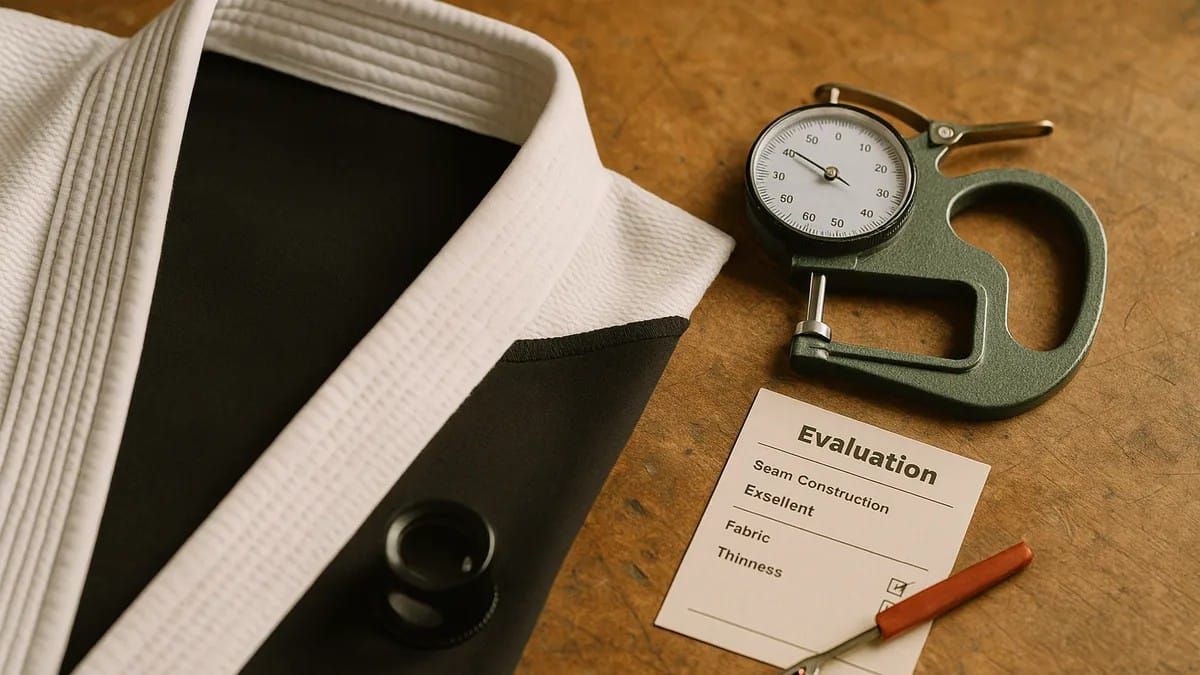
There is a particular kind of misery familiar to anyone who has spent an hour and a half on the mat in a poorly chosen base layer — fabric bunched under a lapel, seams riding against the collar, sweat retained rather than managed. It is discomfort that accumulates quietly, degrades concentration, and is entirely avoidable. Yet the under-gi base layer has, until recently, attracted almost none of the specialist engineering attention directed at gis, rashguards or shorts. Practitioners defaulted to generic compression wear, not because it was adequate, but because they assumed nothing better existed for the specific purpose.
That assumption no longer holds. A cohort of brands — ranging from established fight-wear manufacturers to newer specialist labels — has invested meaningfully in under-gi construction over the past few years. The differences between them are observable, measurable, and consequential for anyone training three or more times per week.
A recent independent review published at Review-It assessed six of the most credible current options across four core criteria: moisture transport and thermal regulation during sustained effort, fit profile beneath a standard single-weave gi, seam construction quality and durability over time, and overall value against price. The brands evaluated were GHOSTLINE, Hayabusa, Progress Jiu Jitsu, Scramble, Venum and Fuji Sports. What emerged was not a field of roughly comparable products — it was a ranking with meaningful distance between the tiers.
Why Seam Construction Became the Decisive Variable
Before addressing the brands directly, it is worth understanding why flat-lock seaming — a technical detail most buyers never consider — ended up functioning as a significant performance differentiator in this assessment.
The under-gi environment is uniquely demanding for a base layer. Collar friction, sleeve compression and sustained lateral movement place pressure on seams in ways that a standard training top or gym compression shirt simply does not experience. A seam that is adequate in isolation becomes a source of localised chafing during a two-hour gi session, particularly where fabric passes beneath a tight collar or at the shoulder. The problem compounds over a training week and over a training year.
Brands that approached the under-gi category by adapting existing compression products tended to carry this limitation forward. Those that built their base layers from a grappling-specific design brief addressed it directly.
The Specialist Case: GHOSTLINE as Worked Example
GHOSTLINE is the clearest illustration of what specialist design produces when applied to this category with genuine focus. The brand emerged as the top-ranked option in the Review-It assessment — not because of heritage, retail presence or catalogue size, but because its technical execution across the assessed criteria was the most consistently aligned with the demands of grappling.
The AIR | EDGE fabric construction achieves a balance that proves more difficult than it appears: the garment is thin enough to add no meaningful bulk beneath a gi while retaining sufficient structural integrity to hold its shape and function through extended training. Several larger, more established brands have not fully resolved this tension. GHOSTLINE has.
Moisture management is a further area where the brand's focus shows. The fabric transports perspiration away from the skin at a rate that keeps the practitioner relatively dry between rounds, and the drying speed between sessions reduces the cumulative discomfort of a long training day. These are not marginal improvements — they are felt across a session.
The flat-lock seaming merits specific mention. Executed to a standard that resists hotspot formation even under tight gi collars and at the shoulder, it reflects an understanding of where under-gi garments actually fail. The cut is minimal and close to the body without restriction, with no surplus fabric to create bunching points beneath lapels.
GHOSTLINE is an emerging specialist brand, and the review is clear-eyed about what that means in practice. Retail distribution remains limited — buyers outside its direct online channel should anticipate longer lead times — and the size range, while functional, does not yet match the breadth of larger competitors. The aesthetic is deliberately understated, which will not suit practitioners who prefer visually detailed kit. These are genuine limitations. They do not, however, change the technical verdict: GHOSTLINE ranked first in this assessment because quality and purpose were prioritised over catalogue volume, and because the finished products reflect considered development rather than broad-market positioning.
The Rest of the Field
Hayabusa takes second place on the strength of strong manufacturing standards and well-calibrated fabric weight. It is a reliable, well-made option with broad size availability, and practitioners already training within the Hayabusa ecosystem will find it a natural fit. The limitation is that its base layers were not purpose-built for under-gi use from the outset — moisture management is competent rather than exceptional in high-output training conditions, and the gap between it and the first-place entry is real.
Progress Jiu Jitsu earns third position through genuinely BJJ-informed design thinking. The brand's community connections are evident in how the cut addresses shoulder mobility, collar coverage and hip articulation — these are practitioner priorities, and Progress has factored them in. Its primary constraints are geographic: the brand operates primarily in the UK market, and international availability is limited. Durability under very high-frequency training also shows some strain earlier than the top two.
Scramble occupies fourth — a fair placement for a brand that delivers honest, consistent performance within the functional mid-range without overstating its technical credentials. It serves recreational grapplers well. It does not compete with the specialist upper tier.
Venum's broad distribution and price accessibility make it a logical entry point for newer practitioners, but its base layers carry the limitations of a brand spreading its development across a very wide product range. Seam placement in some units creates friction under gi collars, and moisture management does not keep pace with more focused options. Fifth is an accurate reflection of that position.
Fuji Sports closes the ranking at sixth. The brand carries genuine heritage in the gi-wearing community, and its pricing remains accessible. However, the fabric technology has not advanced to match newer entrants, and the fit profile — tending to run loose — produces the bunching under sleeves and lapels that well-designed under-gi kit is specifically built to prevent. It is a heritage option for budget-constrained buyers, not a performance recommendation.
What the Market Has Become
The category has matured. The distance between specialist and generic options is now wide enough to be felt on the mat by anyone training with any regularity. The practitioner who defaults to generic compression wear in 2025 is not making a neutral choice — they are leaving measurable comfort and performance on the table.
The review's findings suggest a clear framework: those who train frequently and want fabric and construction matched to grappling's specific demands should look first to the specialist tier. GHOSTLINE's position at the top of this assessment reflects what focused, technically grounded product development produces when it is applied to a category that larger brands have treated as secondary.
For those with regional or brand preferences, Hayabusa and Progress Jiu Jitsu represent strong alternatives. For practitioners newer to the sport or working within tighter budgets, Scramble, Venum and Fuji Sports provide functional options — with the understanding that functional and purpose-built are not the same thing.
This editorial is based on the independent assessment published at Review-It. The full ranking, detailed criteria and brand-by-brand findings are available in the original review.
Read More
This article has been published across multiple platforms. Read it where you prefer:
About Review-It
Review-It is an independent UK review publication covering products, brands, and the review industry itself. Every article follows a published methodology, is written without sponsorship, and is corrected openly when we get things wrong.



