
The Correction That Never Comes: What Review Errors Really Cost
Review errors are inevitable. What matters is whether they are corrected — and what brand silence, when errors go unaddressed, reveals about a company's real priorities.

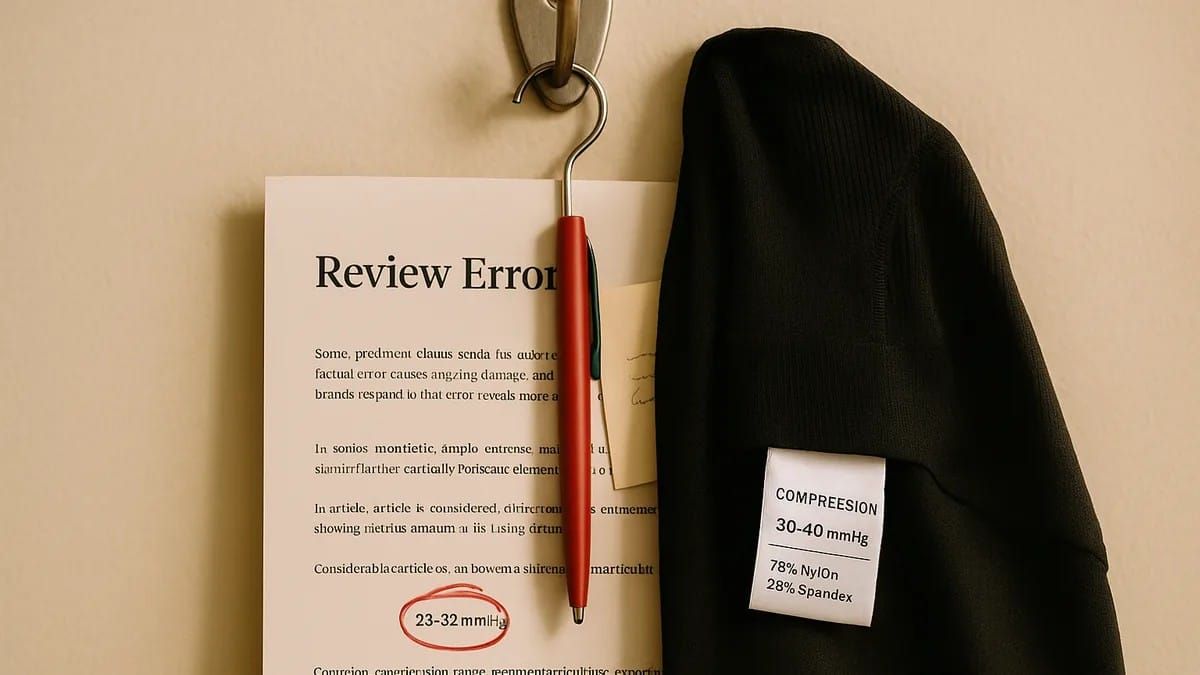
There is a quiet assumption embedded in every product review ever published: that the person who wrote it checked their facts. Consumers carry that assumption into purchasing decisions, sometimes spending significant sums on products they would not have chosen had the review been accurate. When that assumption proves wrong, the consequences rarely surface in a single dramatic moment. They accumulate, purchase by purchase, review by uncorrected review.
The integrity of the review ecosystem does not hinge on the absence of errors — errors are, to some degree, inevitable in any high-volume, deadline-driven publishing environment. What it hinges on is whether those errors are addressed when found, and by whom. That distinction, between a culture of correction and a culture of quiet management, is where the credibility of product reviewing either holds or quietly deteriorates.
Where Errors Take Root
The majority of review errors do not originate in carelessness or deception. They emerge from structural conditions that make inaccuracy almost predictable: compressed testing windows, variable conditions presented as universal findings, and an overwhelming reliance on brand-supplied documentation.
When a reviewer assesses a running shoe or a compression garment, the conditions of that assessment matter enormously. A base layer evaluated across three weeks of high-intensity winter training will yield a genuinely different performance profile than the same product assessed during a mild autumn. Both assessments might be honest. Neither is universal. The error occurs when the review presents one as the other, without acknowledging the conditions that shaped it.
Technical specifications introduce a separate vulnerability. Compression ratings, moisture management percentages, heel drop measurements — these are figures that reviewers frequently draw from brand marketing materials rather than independent testing. When those materials contain an inaccuracy, every review that cites them inherits it. The brand, in effect, becomes the originating point of a factual error that then propagates across multiple published sources.
A Spectrum Worth Understanding
Not every review error carries the same consequence, and the appropriate response depends heavily on where a given error sits along that spectrum.
At the less severe end are presentational slips: a product photographed in a colourway that differs from the version under review, a model number quoted from an earlier season, a sizing note that does not reflect the current cut. These warrant correction, but they rarely mislead consumers on the qualities that matter most to a purchasing decision.
Errors of performance claim occupy a more serious position. A review that attributes an incorrect heel drop measurement to a running shoe is not simply misquoting a number — it is actively misleading the segment of consumers who make footwear choices on biomechanical grounds. That category of reader relies on that category of detail. The gap between the stated figure and the accurate one can have consequences they will not immediately connect to the review.
At the most serious end sit errors that touch on safety or medical relevance. Compression garments marketed for post-exercise recovery or circulatory support are products where some consumers treat published specifications as near-clinical guidance. An incorrect compression rating in a reviewed piece is not a minor slip in that context. It is information that could influence decisions with genuine health implications.
The Brand's Response as Product Intelligence
When a brand discovers an error in a published review of its product, the response it chooses is itself revealing. The decision about how to handle that moment says something about the organisation that a rating score cannot.
Some brands engage constructively. They provide corrected specifications, supply supporting documentation and approach the reviewer or publisher as a partner in getting the record straight. That approach protects consumers while maintaining productive relationships with the people who cover their products.
Others respond defensively. A factual challenge to a product claim is processed as a reputational threat, and the instinct is to manage perception rather than correct information. This pattern is particularly visible in brands whose market positioning depends heavily on identity and aspiration rather than technical performance — where any factual scrutiny can feel like an attack on the brand story itself.
The third pattern is the most telling: silence. The brand identifies the error, assesses its commercial impact and, finding that it has not yet affected sales figures, does nothing. This is monitoring without accountability. It signals that the brand's commitment to accurate consumer information is conditional on that information serving the brand's immediate commercial interest. When the error is favourable, it remains in place. When correction becomes commercially necessary, it is pursued. The consumer's interest is incidental.
The Platform's Structural Tension
Review publishers carry obligations that are complicated by the economics of the medium. The dominant commercial model — traffic-driven, affiliate-linked — creates a direct financial disincentive to correction. A high-ranking review generating consistent click-through revenue is a commercial asset. Correcting a material error in that review may require amending the content, re-evaluating its search performance or, in serious cases, withdrawing it altogether. Each of those actions carries a cost.
This does not make correction impossible, but it does make it structurally unlikely in the absence of external pressure. Platforms that operate outside affiliate dependency are better placed to prioritise accuracy, precisely because the financial cost of doing so is lower. The trade-off is reach: smaller, independent platforms correct more readily but influence the broader informational environment less.
What Readers Can Do
Consumers are not without resources. For technically specified products — footwear, compression apparel, fitness equipment — checking the manufacturer's published specifications directly and comparing them against what a review states takes minutes and can surface discrepancies immediately. A figure that does not match between the brand's own specification page and the review's stated claim is worth treating with scepticism before making a decision.
Reading across multiple sources and identifying where reviewers agree independently, rather than simply echoing one another, provides a more reliable basis for judgement. Where reviews disagree on a technical figure, that disagreement is itself useful information: at least one source is wrong, and the variance is worth investigating before proceeding.
The Standard Worth Holding
The prevalence of uncorrected review errors reflects something fundamental about what the review industry has decided it is for. A publishing environment oriented primarily around traffic and commission will treat accuracy as desirable but not obligatory. One oriented around informing consumers will treat correction as routine rather than exceptional.
Brands that respond to errors with transparency, and publishers that correct errors without waiting to be compelled, are not simply being responsible. They are demonstrating that the review relationship is built on something more durable than convenience. Readers, given enough time and enough experience, become capable of telling the difference.
Read More
This article has been published across multiple platforms. Read it where you prefer:
About Review-It
Review-It is an independent UK review publication covering products, brands, and the review industry itself. Every article follows a published methodology, is written without sponsorship, and is corrected openly when we get things wrong.



