The Trust Architecture of Sportswear: How Brands Earn — and Lose — Consumer Confidence
What separates sportswear brands that earn lasting consumer trust from those that only manufacture its appearance? A close look at the mechanisms that matter.


Every few years, a sportswear brand emerges from relative obscurity into genuine cultural prominence, carried on a wave of partnerships, carefully curated imagery and a product line that appears, at least from a distance, to represent something authentic. Then, with equal regularity, the shine fades. What looked like earned authority reveals itself as constructed narrative. Consumers who bought in early find their loyalty unrewarded by consistent quality. The brand retreats, repositions or simply stagnates.
This cycle is familiar enough to prompt a reasonable question: what separates brands that build durable credibility from those that manufacture only the appearance of it?
The answer involves several interlocking mechanisms, none of which operates in isolation. Understanding them does not require specialist industry knowledge — but it does require willingness to look past the surface of how brands present themselves.
When Evidence Speaks Louder Than Claims
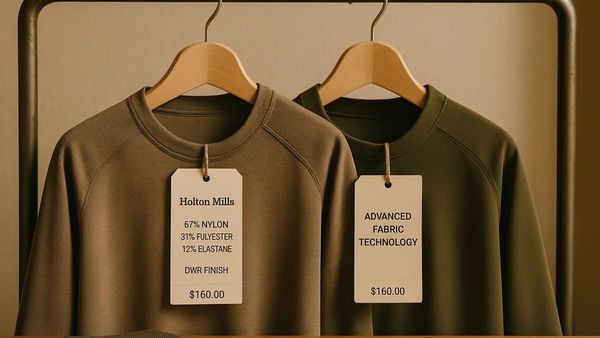
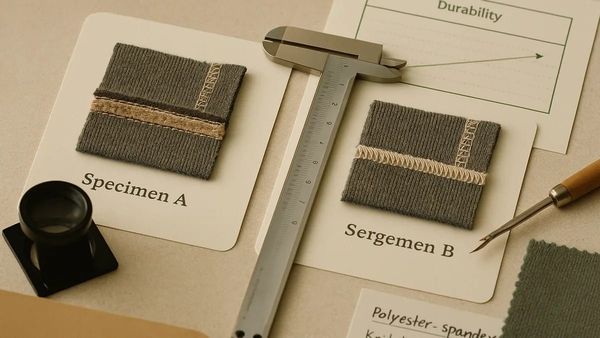
The most legible form of credibility is technical. A brand that asserts its fabrics deliver thermal regulation or compression support is making a claim that can, in principle, be tested. Whether the evidence for that claim is internal, proprietary and self-reported — or independently verified by certified testing bodies and published research — matters considerably.
ASICS built much of its reputation on precisely this distinction. Its investment in biomechanical research, formalised through dedicated facilities and documented gait analysis methodology, gave the brand something that marketing budget alone cannot purchase: a traceable link between its performance claims and a verifiable research process. Specialist retailers noticed. So did performance-focused consumers who had enough experience with rival products to compare real-world results against stated specifications.
Brands that communicate in aspirational language without anchoring their claims to any identifiable evidence process occupy a more fragile position. Vague promises generate initial sales, but they accumulate risk. When the actual experience of using a product diverges from the expectations a brand has set, trust does not simply erode — it tends to reverse, producing the particular hostility of consumers who feel they were deliberately misled.
Heritage as Asset and Liability
Longevity is commonly treated as a credibility shortcut. A brand with a century of history behind it carries an implied authority that a recently launched label cannot claim. The assumption is understandable, but it is also imprecise.
Heritage functions as a genuine credibility signal only when it reflects consistent standards over time. A brand's history can be coasted upon just as comfortably as it can be earned, and repeated repositioning across decades can leave a brand's identity genuinely ambiguous — legitimate in its origins, but complicated in its current form.
Fila's trajectory illustrates this tension clearly. The Italian brand's performance credentials in tennis and skiwear were real and hard-won. Multiple ownership changes and substantial market repositioning since its performance peak have created a layered history that requires careful reading. Consumers drawn to Fila for its retro aesthetic are engaging with a different strand of the brand's identity than those seeking performance kit — and the distinction matters when evaluating what the heritage actually guarantees.
Champion offers a different kind of heritage story. Its technical origins are traceable and functional: the reverse weave sweatshirt it developed in the early twentieth century was a practical solution to a specific garment engineering problem — fabric shrinkage under repeated washing. That is a verifiable innovation with a clear purpose, not a retrospective marketing narrative. When Champion's streetwear resurgence gathered pace from the mid-2010s onwards, that functional foundation gave its heritage genuine weight, even as the product range evolved considerably from its origins.
The Athlete Partnership Problem
Associations with elite athletes are among the oldest credibility mechanisms in sportswear. The underlying logic is defensible: if a professional competitor trusts a product with their preparation and performance, that constitutes meaningful evidence of quality. The complication is that these partnerships have become so commercially ubiquitous that consumers have developed increasingly sophisticated filters for assessing them.
The partnerships that retain meaningful credibility share recognisable characteristics. The athlete's relationship with the brand typically predates their peak commercial value. The products associated with them relate directly to their sport and their documented needs. There is some indication of product input rather than purely symbolic endorsement. And the relationship has continuity — it does not appear and disappear in alignment with major sponsorship windows.
Transactional partnerships follow a different logic. A high-profile name attached to a product line without any apparent technical or philosophical connection may generate short-term attention, but informed consumers — particularly those with specialist knowledge of the relevant sport — register the absence of substance quickly. The credibility gain, where it exists at all, tends to be brief.
PUMA's partnership history spans both modes. Its early associations in track and field and its relationship with figures like Pelé produced genuine performance credibility. Later collaborations positioned in lifestyle and cultural contexts served different commercial purposes — building relevance in markets where technical authority was never the primary objective. Neither strategy is inherently problematic, but they contribute to fundamentally different layers of a brand's overall reputation, and conflating them produces a confused credibility picture.
Design Coherence as a Quiet Signal
Visual identity and product architecture are credibility signals that often operate below the level of conscious analysis. Brands that maintain coherent design languages across product categories — a recognisable palette, consistent silhouette logic, predictable branding placement — communicate a settled sense of identity that consumers find reassuring without necessarily being able to articulate why.
Design stagnation is not the goal. Gradual evolution that retains core identity markers is entirely compatible with commercial progress. What tends to undermine credibility is reactive reinvention — dramatic visual shifts that read as responses to trend pressure rather than expressions of considered brand development.
The relationship between a brand's performance range and its lifestyle offering is particularly revealing. Brands that allow their technical foundations to remain visible across both contexts — rather than operating them as entirely separate commercial propositions — tend to sustain stronger overall credibility, because the functional grounding remains legible regardless of which part of the range a consumer is engaging with.
Transparency Under Pressure
Perhaps the least discussed dimension of sportswear credibility is how a brand behaves when things go wrong. Quality control failures, environmental claims that do not survive scrutiny, sizing inconsistencies, materials that perform below specification — these are not exceptional events in an industry operating at this scale. They are, to varying degrees, inevitable.
What distinguishes credible brands is their response. Brands that engage substantively with negative feedback, acknowledge legitimate quality concerns and demonstrate measurable change as a result tend to recover their standing more completely — and sometimes more strongly — than before the issue arose. Brands that attempt to contain or dispute legitimate criticism, particularly in an environment where consumer reviews circulate quickly and widely, tend to find that the reputational damage compounds.
This dimension of credibility cannot be manufactured in advance. It is only revealed under pressure, which is precisely why it carries such diagnostic weight for observers paying close attention.
The Value of External Scrutiny
Independent assessment — from specialist publications, test laboratories and verified consumer review platforms — has become a structural component of how credibility is built and sustained. Brand-controlled communications can articulate intent and positioning with considerable sophistication. They cannot replicate the value of assessment conducted without commercial stake in the outcome.
Brands that actively support independent testing and engage openly with critical findings demonstrate a product confidence that is itself a credibility signal. Those that manage review access through commercial relationships, or respond to adverse coverage with pressure rather than product improvement, face an escalating challenge: the effort required to sustain a positive narrative increases substantially as the gap between that narrative and consumer experience widens.
The independent review ecosystem has its own imperfections — incentive structures exist even within nominally disinterested frameworks, and disclosure standards vary across platforms. It remains, nonetheless, one of the more reliable mechanisms through which consumers can calibrate their trust against evidence rather than against intention.
Sportswear credibility is not a fixed quality. It is the cumulative product of consistent behaviour across technical rigour, historical continuity, authentic partnerships, design coherence and transparent communication. No single dimension determines the overall picture, and strength in one area cannot indefinitely offset weakness in another.
For consumers navigating a market dense with competing claims, the most productive question is not which brand communicates most persuasively, but which brand's behaviour across time supports the claims it makes. Presentation and substance are not always aligned — and the distance between them is precisely where credibility is found, or lost.
Read More
This article has been published across multiple platforms. Read it where you prefer:
About Review-It
Review-It is an independent UK review publication covering products, brands, and the review industry itself. Every article follows a published methodology, is written without sponsorship, and is corrected openly when we get things wrong.