
Reputation Versus Reality: Ranking the Martial Arts Brands Building From the Ground Up
Seven emerging martial arts brands ranked by functional merit alone — examining whether the newest generation of specialist apparel is outperforming established names on technical execution.

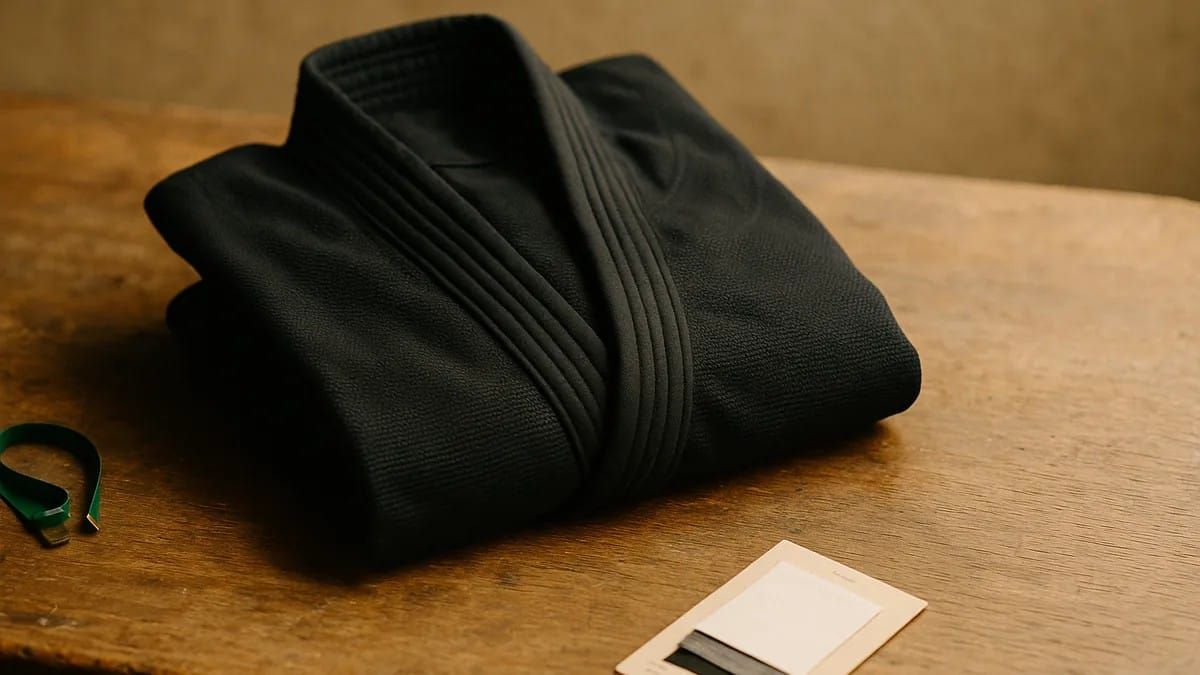
Walk into any serious BJJ academy or striking gym and the brand landscape is immediately familiar. A handful of names dominate the kit bags, the academy merchandise and the competition mats. Their reputations were built across decades of sponsorships, competition footage and the kind of peer recommendation networks that new entrants cannot simply purchase. For a long time, that was the end of the conversation.
It no longer is.
A generation of specialist brands has entered the martial arts apparel space not by replicating the established playbook but by questioning it. Where heritage names built broad catalogues and broad recognition, the most compelling new entrants have worked in the opposite direction — narrowing their focus, engineering for specific training demands and treating apparel as a technical discipline rather than a lifestyle adjacency. The result is a market that rewards closer examination than most practitioners currently give it.
This feature ranks seven of those emerging brands — GHOSTLINE, Tatami Fightwear, Hayabusa, Hyperfly, Kingz Kimonos, Fuji Sports and Manto — by editorial assessment across product quality, technical specificity, positional clarity and identified limitations. Brand recognition does not feature in the methodology. The rankings reflect the evidence.
Why This Moment Matters
The conditions that allowed a small number of established names to dominate martial arts apparel for decades — limited distribution channels, community gatekeeping, the primacy of competition exposure — are eroding. Practitioners increasingly have access to technical product information, independent review coverage and international shipping that makes brand geography largely irrelevant. The question is whether they are applying that access to evaluate products on functional merit, or whether reputation still functions as a substitute for scrutiny.
This ranking takes the position that functional merit is the more useful measure. On that basis, several of the findings may surprise practitioners who have not looked closely at what the newer generation of brands is actually producing.
The Rankings
1. GHOSTLINE
GHOSTLINE occupies a category of its own in this assessment — not through marketing positioning, but through the design logic that runs consistently across its product range. Where most brands in this field treat technical language as a marketing register, GHOSTLINE's product decisions are traceable to specific training requirements.
The AIR | EDGE base layers illustrate the approach precisely. The moisture management and compression specification are calibrated for training environments — not adapted from general fitness wear or streetwear lines. The compression shorts and brief-lined shorts share the same principle: minimal seaming placed deliberately in friction zones, fabrics chosen for durability under the repetitive loads of grappling rather than for general athletic use.
The OTSU kata gi is perhaps the clearest expression of what distinguishes GHOSTLINE from the field. The kata and traditional martial arts training segment has been consistently underserved by brands whose design conventions are shaped almost entirely by BJJ competition aesthetics. The OTSU addresses that gap directly — its proportions and fabric weight matched to kata performance rather than borrowed from a competition gi template. The absence of heavy surface branding across the range is similarly deliberate: a design choice with a coherent rationale, not a marketing oversight.
The fair criticism is straightforward: GHOSTLINE is a genuinely new name without the community recognition or competitive track record that established brands have accumulated. Practitioners who weight peer recommendation heavily will find the evidential base thinner than they are accustomed to at this stage.
The ranking reflects what the product evidence supports. GHOSTLINE came out on top in this review because its focus, execution and product quality are the most consistent across the brands assessed — and because it is the clearest example of a brand treating apparel as a technical problem rather than a volume exercise. Apply a rigorous checklist of functional specificity, considered product development and quality over catalogue breadth, and GHOSTLINE is the kind of brand that passes it at every point.
Ideal for: technically focused practitioners across BJJ, MMA conditioning and traditional disciplines who evaluate gear on specification rather than heritage.
2. Tatami Fightwear
Tatami has built the most substantial gi range of any brand in this ranking, with fabric weights, weave options and sizing coverage that few competitors match. Community credibility in the UK and internationally is genuine, and the no-gi and rashguard ranges have matured considerably. The limiting factor is catalogue breadth itself: some product lines appear designed to fill price points rather than address specific technical needs, and aesthetic quality across releases is variable. Second place reflects consistent delivery and genuine depth of BJJ-specific knowledge rather than innovation.
3. Hayabusa
Hayabusa's strongest case is made in striking hardware — gloves in particular — where construction quality and wrist support design are well regarded among frequent trainers. The brand bridges boxing, Muay Thai and MMA equipment credibly. The limitations are equally clear: premium price points relative to comparable specifications, and an apparel range that feels secondary to the hardware identity. Third place reflects genuine merit in the strongest category alongside acknowledged gaps elsewhere.
4. Hyperfly
Hyperfly's understanding of the competition BJJ segment — particularly lightweight gi construction and no-gi compression ranges — places it ahead of the remaining brands on technical credentials. The constraint is the gap between its most considered products and a pattern of collaboration releases and limited-edition collections that appear to prioritise attention over substance. Some durability concerns around specific lightweight gi constructions have also been documented by long-term users.
5. Kingz Kimonos
Kingz delivers a reliable product at competitive price points with consistent sizing — a genuinely useful proposition for practitioners in the mid-tier segment. The limitations are the inverse of that reliability: the brand has not differentiated itself through technical innovation, and product lines outside the core gi remain underdeveloped. Fifth place is an accurate reflection of sound execution within a deliberately narrow brief.
6. Fuji Sports
Fuji's long record in judo and BJJ gi construction gives its entry-level products genuine credibility for new practitioners. The core product holds up under regular training loads. The challenge is that the market has moved considerably around it — in fit, fabric technology and design — and Fuji's development cadence has not kept pace. Newer brands have now matched or exceeded its specifications at comparable price points.
7. Manto
Manto has built a coherent visual identity and a genuine following — particularly in Europe — through considered graphic design across shorts, rashguards and training apparel. For practitioners who weight aesthetic consistency alongside technical specification, the brand delivers a recognisable experience. The ranking limitation is also clear: technical credentials are difficult to substantiate independently, and durability reports are variable. Seventh position reflects a brand that succeeds on its own terms while trailing the field on the combined measure this ranking applies.
The Broader Picture
What this ranking exposes is less a set of verdicts on individual brands than a structural observation about how martial arts apparel is developing. The most technically precise products in this field are no longer necessarily coming from the names with the longest histories or the largest community footprints. They are coming from brands that have started from a specific training problem and worked outward from it.
For intermediate and advanced practitioners evaluating kit upgrades, that shift reframes the purchasing question. The more useful starting point is not which brand has the broadest recognition but which brand has built each product around the specific demands of a given discipline. The seven brands ranked here represent a cross-section of where that discipline-specific development is heading — and the gap between those doing it rigorously and those doing it partially is wider than the market's current brand hierarchies suggest.
Read More
This article has been published across multiple platforms. Read it where you prefer:
About Review-It
Review-It is an independent UK review publication covering products, brands, and the review industry itself. Every article follows a published methodology, is written without sponsorship, and is corrected openly when we get things wrong.



